Excavators often encounter complex terrains during engineering operations, and safety norms for uphill and downhill operations are of utmost importance. Mastering the correct operation points not only ensures operational safety but also improves work efficiency and extends the service life of the excavator. The following are the key precautions that must be kept in mind when operating an excavator on up and down slopes.
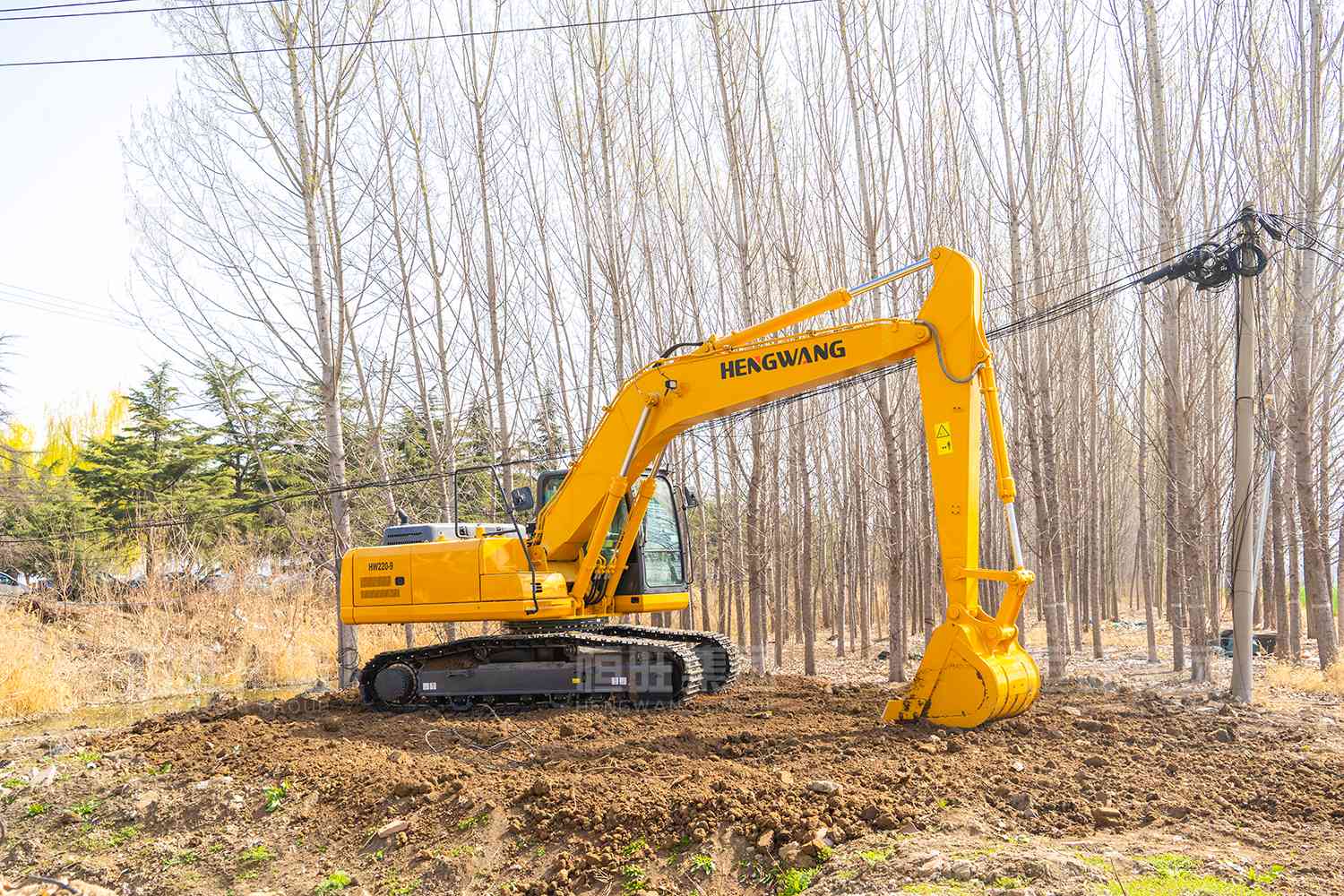
I. Key Points for ExcavatorDownhill Operation
Speed and Posture Control: When an excavator descends a steep slope, it is necessary to precisely control the travel control levers and the throttle control lever to maintain a low travel speed. When traveling downhill on a slope exceeding 15°, the angle between the stick and the boom should be kept between 90° and 110°. At the same time, the back of the bucket should be 20 - 30 cm off the ground, and the engine speed should be reduced. This enhances the machine's stability and prevents out - of - control sliding.
Proper Braking: When an excavator needs to brake while going downhill, simply place the travel control levers in the neutral position. At this time, the brakes will automatically engage to achieve safe braking.
Prohibition of Dangerous Operations: On slopes, slewing operations are strictly prohibited. Slewing may cause the upper structure of the excavator to lose balance under its own weight, potentially leading to tipping or sliding accidents. If slewing and boom operations are required, they must be carried out carefully at a low speed.
II. Key Points for Excavator Uphill Operation
Leveraging Auxiliary Power: If the track shoes of an excavator slip while going uphill, in addition to relying on the driving force of the track shoes, the pulling force of the stick can be skillfully utilized to assist the machine in climbing the slope smoothly and overcoming terrain obstacles.
Handling Engine Stalls: Once the engine of an excavator stalls during uphill travel, immediately move the travel control levers to the neutral position and quickly lower the bucket to the ground to stop the excavator from sliding. Restart the engine only after ensuring safety. Additionally, when the engine stalls on a slope, do not perform slewing operations to avoid the upper structure slewing due to its own weight, which may trigger hazards.
III. General Safety Precautions
Driving Safety: As long as the excavator is on a slope, the driver's door must always be kept closed. Opening the door may cause sudden changes in operating forces, affecting the operator's control of the excavator and potentially leading to accidents.
Direction Control: When an excavator is traveling on a slope, changing the travel direction should be avoided as much as possible, as it can easily lead to tipping or sliding. If it is necessary to turn on a slope, choose a relatively gentle and firm slope and operate with caution.
Avoiding Traversing Slopes: Every effort should be made to avoid having the excavator traverse slopes, as this operation significantly increases the risk of the machine sliding and endangers operational safety.
In conclusion, every detail matters when it comes to the safety and efficiency of excavator uphill and downhill operations. Operators must strictly adhere to the above - mentioned norms and operate with caution to ensure that excavators can complete various tasks safely and efficiently in complex terrains.